
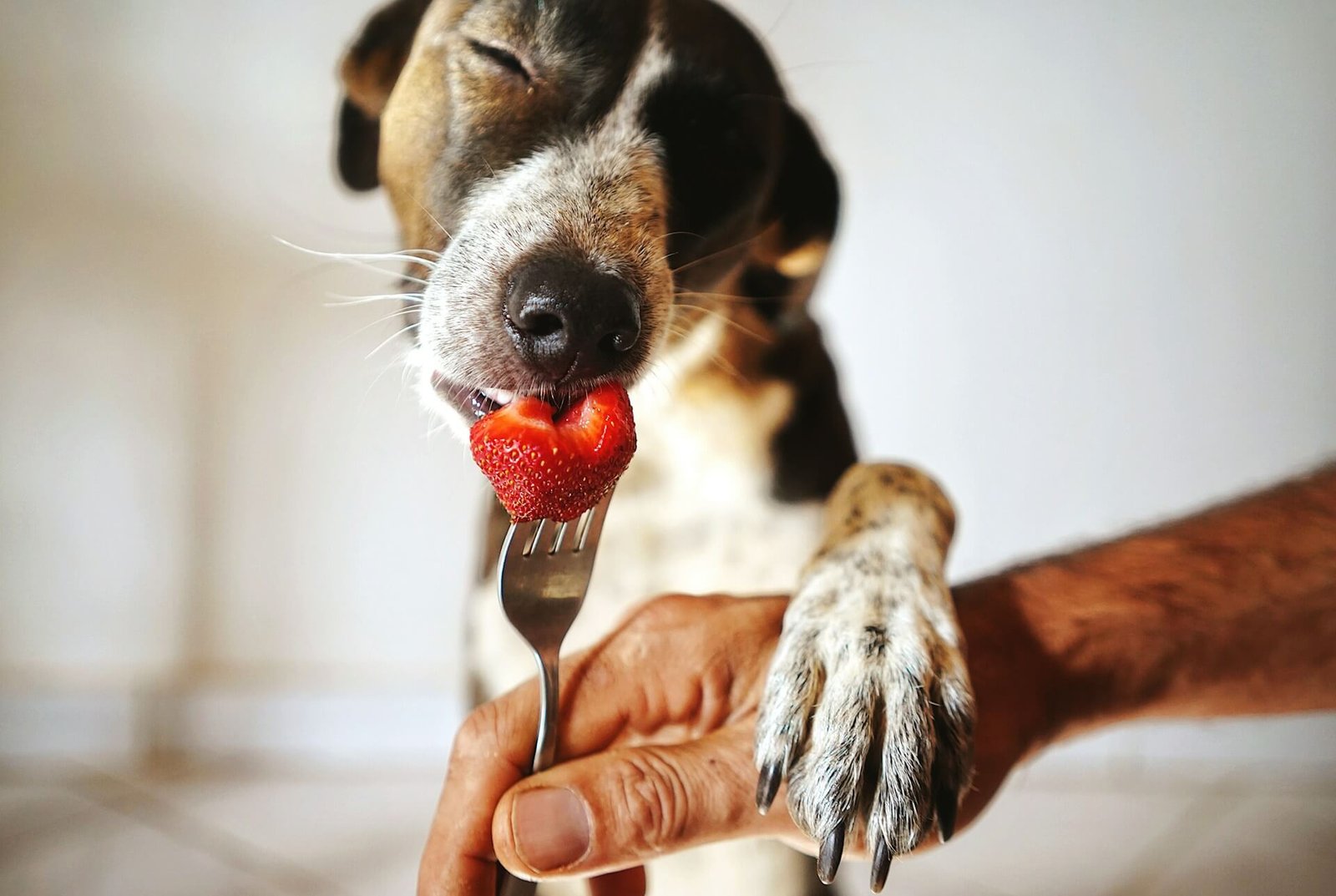
Can Dogs Eat Strawberries? Do you reach for fresh strawberries during spring and summer while your dog watches with hopeful eyes? You’re probably curious whether this popular berry makes a safe snack for your canine companion.
Here’s what you need to know: strawberries are safe for dogs when prepared correctly. The berry itself offers nutritional value, though you’ll want to remove certain parts and control portion sizes.
Can Dogs Eat Strawberries?
Yes, your dog can safely enjoy strawberries as an occasional snack. These berries contain no toxic compounds that harm dogs.
However, safe doesn’t mean unlimited. Strawberries work best as a treat, not a dietary staple. Your dog’s complete nutrition comes from their regular food. Think of strawberries as a bonus rather than something essential to their health.
Also read on:
Preparation matters just as much as the answer itself. You can’t simply hand your dog strawberries straight from the container. The green tops need removing first, and whole berries pose certain risks depending on your dog’s size.
Are Strawberries Safe for Dogs?
The flesh of strawberries contains nothing harmful to healthy dogs. Unlike grapes or raisins, which are genuinely dangerous, strawberries fall into the safe category.
The leafy green tops present the main concern. These parts are technically edible but cause digestive discomfort in many dogs. They’re fibrous and bitter, leading to upset stomachs when consumed. While not toxic, they’re best avoided entirely.
Whole strawberries create choking risks, particularly for smaller breeds. A medium-sized berry might seem small to you, but it represents a substantial piece for a toy breed. The shape and slippery texture make swallowing without chewing easier, which creates danger.
Dogs with specific health conditions face additional considerations. Diabetic dogs need to avoid strawberries because natural fruit sugars still affect blood glucose levels. Dogs currently on weight loss plans should skip strawberries or eat only minimal amounts since every calorie matters during weight reduction.
Health Benefits of Strawberries for Dogs
When served properly, strawberries deliver legitimate nutritional advantages.
Vitamin C appears in high concentrations in strawberries. This vitamin supports immune function and acts as an antioxidant. Dogs naturally produce their own vitamin C, but supplemental amounts from food sources may provide additional benefits.
The fiber content supports digestive regularity. Fiber helps food move through the intestinal tract at appropriate speeds, preventing both constipation and loose stools when consumed in balanced amounts.
Antioxidants found in strawberries help protect cells from damage. Free radicals cause oxidative stress throughout the body, potentially contributing to the aging process and various health issues. Antioxidants neutralize these harmful molecules.
Water content keeps strawberries refreshing and hydrating. While not a replacement for drinking water, strawberries contribute to overall fluid intake. This is particularly important during warm weather, when dogs require extra hydration.
The calorie content stays impressively low. One medium strawberry contains roughly 4 calories. This makes strawberries a smart choice compared to many commercial dog treats that pack significantly more calories per serving.
Risks and Side Effects of Feeding Strawberries to Dogs
Even beneficial foods carry potential downsides requiring attention.
Sugar content poses the primary concern. Strawberries contain natural sugars that taste sweet and appealing. Too much sugar leads to weight gain over time, contributes to dental problems, and affects dogs with metabolic conditions negatively.
Digestive upset occurs when dogs eat excessive amounts. Their digestive systems aren’t designed to process large quantities of fruit. Symptoms include gas, bloating, loose stools, or outright diarrhea. These problems typically resolve within 24 hours, but cause discomfort meanwhile.
The green tops and stems create unnecessary irritation. Beyond being difficult to digest, these parts taste bitter and unpleasant. Dogs who accidentally eat them often experience nausea or stomach cramping.
Choking hazards exist with whole berries. Small dogs face the highest risk, but even large dogs can choke if they swallow quickly without chewing. The smooth, round shape makes strawberries particularly problematic in this regard.
Pesticide residue concerns some owners. Commercially grown strawberries often rank high on lists of produce with pesticide residues. Washing thoroughly helps, but organic options eliminate most chemical exposure.
How Many Strawberries Can a Dog Eat Safely?
Appropriate portions depend entirely on your dog’s size and weight.
The 10% guideline applies to all treats, including strawberries. Treats shouldn’t exceed 10% of daily caloric intake. For most dogs, this translates to small quantities.
Extra-small dogs under 10 pounds should receive just one or two small strawberries, cut into pieces. Tiny breeds reach their treat allowance quickly, given their low daily calorie needs.
Small dogs between 10 and 25 pounds can handle two to three medium strawberries, sliced appropriately. This provides enough for them to enjoy the treat without overdoing it.
Medium-sized dogs, weighing 25 to 50 pounds, can safely eat four to five strawberries. At this size, strawberries remain a relatively small portion of their daily food intake.
Try the dog weight calculator
Large dogs over 50 pounds can consume five to seven strawberries without problem. Even at these amounts, strawberries represent just a small fraction of a large dog’s caloric needs.
Frequency matters as much as quantity. Daily strawberries aren’t ideal, even in appropriate portions. Offer strawberries two or three times weekly at most, rotating with other safe fruits and vegetables to provide variety.
How to Feed Strawberries to Dogs (Best Practices)
Proper preparation ensures your dog enjoys strawberries without incident.
Wash berries thoroughly under running water. This removes dirt, bacteria, and pesticide residues. Even organic strawberries benefit from washing since they still collect environmental contaminants.
Remove all green tops completely. Pinch off the leafy crown and any attached stem. These parts serve no purpose in your dog’s treat and only create potential problems.
Slice strawberries into size-appropriate pieces. Small dogs need tiny cubes, perhaps quarter-inch pieces. Medium dogs can handle half-inch chunks. Large dogs might eat slightly bigger pieces, but smaller is always safer.
Serve strawberries fresh and plain. No additions whatsoever. Don’t sprinkle sugar, add cream, or include any toppings. Your dog doesn’t need or want flavor enhancement.
Try freezing strawberry pieces for summer treats. Frozen berries provide cooling relief on hot days. They also last longer in your dog’s mouth, extending enjoyment. Just ensure frozen pieces aren’t large enough to crack teeth.
Mashing is a great option for elderly or picky pets. Mashed strawberries can be frozen into ice cube trays for portion-controlled snacks or easily combined with other foods.
Avoid all processed strawberry products. Strawberry jam, preserves, and yogurt contain excessive sugar. Canned strawberries often include syrup or artificial sweeteners. Strawberry-flavored treats might contain xylitol, which is deadly toxic to dogs.
Can Puppies Eat Strawberries?
Puppies can technically eat strawberries, but extra precautions apply.
Young digestive systems react more sensitively than adult systems. What causes minor discomfort in an adult might significantly upset a puppy’s stomach. Wait until your puppy has adjusted to their regular food before introducing any treats.
Start with one small piece. For the next 24 hours, keep an eye out for reactions. Verify the consistency of your stool and keep an eye out for any behavioral shifts that might indicate discomfort.
Compared to their adult weight, puppies require smaller quantities. Certain nutritional ratios are necessary for their growing bodies. Compared to adult dogs, treats should make up an even smaller portion of their regular diet.
Cut puppy parts very thinly. For little breeds, consider pea-sized chunks; for medium breeds, consider pea-sized portions. Puppies who may not chew completely are more likely to choke.
For puppies, always take off the tops and wash with caution. They are particularly vulnerable to bacteria and chemicals since their immune systems are still maturing.
Consult your veterinarian before introducing strawberries. They know your puppy’s specific health history and can provide guidance tailored to your situation.
When Dogs Should Not Eat Strawberries
Diabetic dogs must avoid strawberries completely. Managing diabetes requires strict control over sugar intake. Natural fruit sugars disrupt blood glucose regulation just as added sugars do. Don’t risk your diabetic dog’s health for a treat.
Dogs on weight reduction diets need minimal or no strawberries. When you’re counting every calorie to help your dog lose weight, consuming strawberries consumes valuable treat calories that might be better spent on training rewards.
Dogs with chronic digestive problems should skip strawberries. If your dog has inflammatory bowel disease, frequent diarrhea, or other ongoing gastrointestinal issues, introducing new foods risks triggering symptoms.
Never give strawberries to a dog already experiencing digestive upset. If your dog currently has diarrhea, vomiting, or general stomach discomfort, wait until they’ve fully recovered before offering any treats.
Dogs with a history of food allergies need careful consideration. While strawberry allergies are rare, dogs prone to allergic reactions should have new foods introduced very cautiously under veterinary supervision.
Very senior dogs with dental disease might find strawberries problematic. If your elderly dog has loose teeth, gum disease, or other dental issues, even soft strawberries could cause discomfort.
Signs Your Dog May Be Sensitive or Allergic to Strawberries
True allergies remain uncommon, but sensitivities occur more frequently. Recognizing symptoms helps you respond appropriately.
Skin reactions often appear first. Watch for sudden scratching within hours of eating strawberries. Red patches on the skin, particularly around the face, ears, or paws, suggest an allergic response. Hives appear as raised bumps across the body.
Digestive symptoms indicate sensitivity or intolerance. Vomiting within a few hours suggests the stomach rejected strawberries. Diarrhea or very loose stools show that the intestines didn’t process the fruit well. Excessive gas and visible bloating also count as digestive symptoms.
Facial swelling requires immediate attention. If your dog’s muzzle, eyes, or throat area swells after eating strawberries, this represents a serious allergic reaction. Contact your veterinarian or emergency clinic immediately.
Respiratory problems demand urgent care. Coughing, wheezing, or labored breathing after strawberry consumption indicates a severe reaction. Don’t wait to see if it improves on its own.
Behavioral changes sometimes signal discomfort. Restless pacing, inability to settle, or obvious signs of feeling unwell all warrant concern. Your dog might also paw at their mouth or face if experiencing irritation.
Lethargy or weakness following strawberries isn’t normal. While mild sleepiness after eating is fine, notable energy loss suggests a problem.
When any symptoms appear, discontinue strawberries immediately. For mild reactions like a single episode of soft stool, simply stop offering strawberries and monitor. For moderate to severe symptoms, contact your veterinarian for guidance.
Keep in mind that most negative reactions come from eating too many strawberries rather than true allergies. Proper portion control prevents most problems.
Conclusion
Strawberries make an excellent occasional treat for most dogs when you prepare them correctly and keep portions reasonable. Your dog benefits from the vitamins, fiber, and antioxidants while enjoying a naturally sweet snack.
Success requires following straightforward safety steps. Always wash strawberries thoroughly to remove pesticides and contaminants. Remove the green leafy tops and stems completely since these parts irritate digestive systems. Cut strawberries into appropriate pieces based on your dog’s size to prevent choking. Keep portions small according to the guidelines for your dog’s weight.
Remember that strawberries supplement your dog’s diet rather than form a significant part of it. Complete nutrition comes from quality dog food formulated for their life stage and size. Strawberries just add variety and enjoyment to their eating experience.
Pay attention to how your individual dog responds. Most dogs tolerate strawberries perfectly and even show enthusiasm for them. Some dogs might not enjoy the taste or texture. Others may have sensitive stomachs that react poorly even to small amounts. All these responses are normal.
If you have any questions about feeding strawberries to your specific dog, particularly if they have health conditions or take medications, consult your veterinarian. They understand your dog’s unique health situation and can provide personalized advice.