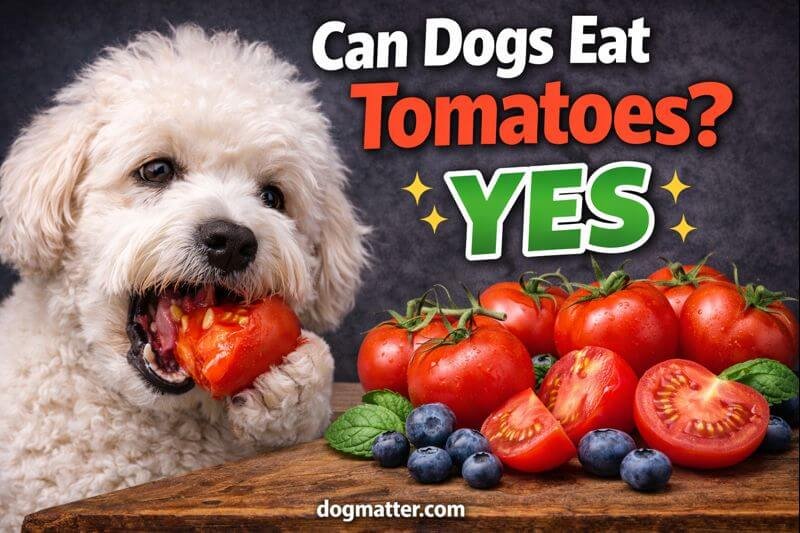
Can Dogs Eat Tomatoes? Yes! Are you preparing a salad with fresh tomatoes while your dog watches hopefully from nearby?
You might be wondering whether sharing this common kitchen staple makes sense for your canine friend.
Here’s the truth: dogs can eat ripe, red tomatoes safely, but only the flesh. Green parts of tomato plants contain toxic compounds that can seriously harm your dog.
Can Dogs Eat Tomatoes?
Yes, dogs can consume fully ripened tomatoes. The bright red flesh contains nothing poisonous to healthy dogs.
This answer requires major qualifications, though. Only completely ripe tomatoes qualify as safe. Any green coloring indicates the presence of harmful compounds. The stems, leaves, and unripe fruit from tomato plants contain toxins that affect dogs negatively.
Think of tomatoes as an occasional snack rather than a dietary staple. Your dog receives complete nutrition from their regular food. According to FDA pet food standards, properly formulated dog food already provides everything they need nutritionally.
Are Tomatoes Safe for Dogs?
Fully ripened tomatoes with deep red coloring are safe for most healthy dogs. The flesh itself poses no toxicity concerns.
The danger lies in other parts of the tomato plant. Tomatoes belong to the nightshade family, which includes several plants containing natural toxins. These protective compounds, called solanine and tomatine, concentrate in green parts of the plant.
Toxic parts include:
- All leaves on the plant
- Stems and vines
- Green, unripe tomatoes
- Any tomato showing green coloring
Dogs that consume these parts face genuine health risks. The toxins affect both the nervous and digestive systems. Small amounts might cause mild discomfort, while larger quantities can create serious medical emergencies.
Certain health conditions change the safety profile entirely. Dogs with diabetes can’t handle the natural sugars in tomatoes safely. Dogs on weight reduction programs need strict calorie control. The acidity in tomatoes also bothers dogs with sensitive stomachs or acid reflux.
Health Benefits of Tomatoes for Dogs
When prepared correctly, ripe tomatoes offer genuine nutritional value for our dogs.
Vitamins support essential body functions. Ripe tomatoes contain several beneficial vitamins:
- Vitamin A maintains healthy vision, skin, and cell growth
- Vitamin C boosts immune response and acts as an antioxidant
- Vitamin K supports blood clotting and bone health
Minerals contribute to overall wellness. Potassium helps regulate blood pressure and supports muscle function. Small amounts of other minerals provide additional benefits.
Lycopene acts as a powerful antioxidant. This compound gives tomatoes their red color. Research suggests lycopene may protect against certain health problems, though studies in dogs remain limited.
Fiber aids digestive health. The fiber content helps regulate bowel movements and supports beneficial gut bacteria. Too much fiber causes problems, but appropriate amounts benefit digestion.
Low calorie content supports weight management. A medium tomato contains roughly 20 calories. This makes tomatoes a reasonable treat option compared to many commercial dog treats that pack significantly more calories.
Water content adds hydration. Tomatoes consist of about 95% water, contributing to overall fluid intake without replacing their water bowl.
Risks and Side Effects of Feeding Tomatoes to Dogs
Even ripe tomatoes carry potential downsides requiring awareness.
Toxin exposure creates serious dangers. Green tomatoes, stems, leaves, and vines contain solanine and tomatine. These natural compounds protect the plant from pests but harm dogs. Symptoms of toxicity include weakness, confusion, digestive upset, loss of coordination, and potentially worse effects depending on the amount consumed.
Acidity irritates sensitive digestive systems. Tomatoes rank among the more acidic foods. This acidity can trigger heartburn, upset stomach, or worsen existing digestive conditions like acid reflux or gastritis.
Excessive amounts cause digestive problems. Too many tomatoes at once lead to gas, bloating, diarrhea, or vomiting. The combination of acidity, fiber, and natural sugars overwhelms digestive systems when consumed in large quantities.
Choking hazards exist with certain preparations. Whole cherry tomatoes pose choking risks, particularly for smaller breeds. Even larger tomato pieces can cause problems if your dog gulps food without proper chewing.
Garden access creates toxicity risks. Dogs with access to tomato plants may chew on leaves, stems, or unripe fruit. Home gardeners need to fence off tomato plants completely or grow them in areas dogs can’t reach.
Processed tomato products contain dangerous additives. Commercial tomato sauces, soups, ketchup, and other products typically include ingredients like onions, garlic, excessive salt, or artificial sweeteners. These additives range from unhealthy to genuinely toxic.
How Many Tomatoes Can a Dog Eat Safely?
Appropriate portions depend on your dog’s size and daily caloric requirements. Following FDA nutritional guidelines, treats should stay under 10% of daily calories.
Extra small dogs (under 10 pounds):
- One or two small pieces maximum
- About the size of a thumbnail
- Once weekly at most
Small dogs (10 to 25 pounds):
- Two to three small chunks per serving
- Roughly half-inch pieces
- Once or twice weekly
Medium dogs (25 to 50 pounds):
- Three to five medium pieces per serving
- About one-inch chunks
- Twice weekly maximum
Large dogs (over 50 pounds):
- Five to seven pieces per serving
- One to one-and-a-half inch chunks
- Two to three times weekly
These amounts represent maximum portions, not starting quantities. Begin with less during initial exposure. Monitor your dog’s reaction over 24 hours before offering more.
Frequency matters as much as quantity. Daily tomatoes aren’t recommended even in proper portions. Rotate between different safe foods to provide variety without overdoing any single item.
How to Feed Tomatoes to Dogs (Best Practices)
Proper preparation ensures your dog enjoys tomatoes without incident.
Select only fully ripe tomatoes. Choose tomatoes showing complete red coloring throughout. Avoid any tomatoes with green areas, even small patches near the stem. The deeper the red color, the safer the tomato.
Wash thoroughly before preparation. Rinse tomatoes under running water for at least 30 seconds. This removes pesticide residues, dirt, and bacteria that collect on the surface. Organic tomatoes still require washing.
Remove all inedible parts completely. Cut away the entire stem area where it attached to the plant. This green portion contains toxins even on ripe tomatoes. Remove any remaining leaves or stem pieces.
Cut into appropriate sizes. Dice tomatoes into small pieces suitable for your dog’s size. Smaller dogs need tiny cubes. Larger dogs can handle bigger chunks, but smaller is always safer for preventing choking.
Consider removing seeds for sensitive dogs. While seeds aren’t toxic, they sometimes cause digestive upset in dogs with sensitive stomachs. Scoop out seed clusters if your dog tends toward stomach problems.
Serve plain without additions. No salt, pepper, oils, or other seasonings. Your dog doesn’t need or want flavor enhancement. Plain tomatoes taste perfectly fine to dogs.
Try different serving methods:
- Mix small pieces into regular food as a topper
- Freeze pureed tomato in ice cube trays for summer treats
- Offer fresh pieces as training rewards
- Mash and spread on food for picky eaters
Avoid all processed tomato products completely:
- Never share tomato sauce, soup, or pasta dishes
- Skip ketchup entirely (contains sugar and often onion)
- Avoid canned tomatoes packed with salt or additives
- Don’t offer pizza, salsa, or other tomato-based foods
Can Puppies Eat Tomatoes?
Puppies can technically eat ripe tomatoes once they’ve adjusted to solid food, but extra caution applies.
Young digestive systems react more sensitively than adult systems. What barely affects an adult might significantly upset a puppy’s stomach. Wait until your puppy has completely adjusted to their regular puppy food before introducing any treats.
Start with a single tiny piece no bigger than a small pea. Watch closely for reactions over the next 24 hours. Check stool consistency and general behavior. Any sign of digestive distress means tomatoes aren’t appropriate yet.
Puppies need even tinier portions than their eventual adult weight suggests. Their developing bodies require specific nutrition ratios. The 10% treat guideline applies even more strictly to growing puppies.
Remove all green parts and wash just as carefully as you would for adult dogs. Puppies face the same toxicity risks from green plant parts. Their smaller size actually makes them more vulnerable to toxin effects.
Consult your veterinarian before introducing tomatoes to puppies. They understand your puppy’s specific health status, developmental stage, and nutritional requirements. They can provide guidance tailored to your individual situation.
When Dogs Should Not Eat Tomatoes
Certain circumstances make tomatoes inappropriate regardless of ripeness or preparation.
Diabetic dogs must avoid tomatoes completely. Managing diabetes requires strict control over all sugar sources. Natural fruit sugars affect blood glucose levels just as added sugars do. Don’t risk your diabetic dog’s health for a treat.
Dogs on weight reduction programs need minimal treats. When counting every calorie to help your dog lose weight, tomatoes consume valuable treat calories without providing substantial satiety. Save treat calories for training rewards that serve additional purposes.
Dogs with acid reflux or sensitive stomachs should skip tomatoes. The natural acidity in tomatoes can trigger or worsen heartburn, gastritis, and other digestive conditions. If your dog has chronic digestive issues, avoid potentially irritating foods.
Never give tomatoes during active digestive upset. If your dog currently has diarrhea, vomiting, or general stomach discomfort, wait until complete recovery before offering any treats. Adding new foods during illness complicates diagnosis and treatment.
Dogs with access to tomato gardens need complete restriction. If your dog has shown interest in chewing tomato plants, don’t offer ripe tomatoes either. This might confuse them about which parts are safe and encourage garden sampling.
Dogs with kidney disease require veterinary approval. The potassium content in tomatoes might affect dogs managing kidney problems. Check with your veterinarian before introducing tomatoes if your dog has kidney disease.
Very small breeds face disproportionate risks. Dogs under five pounds face higher choking risks and may be more sensitive to the acidity. Discuss appropriate treat options with your veterinarian rather than assuming tomatoes suit tiny dogs.
Signs Your Dog May Be Sensitive or Allergic to Tomatoes
True allergies remain uncommon, but sensitivities and toxicity reactions occur. Recognition helps you respond appropriately.
Digestive symptoms indicate problems:
- Vomiting within hours of eating
- Diarrhea or very loose stools
- Excessive drooling or lip licking
- Loss of appetite following treats
- Obvious abdominal discomfort or cramping
- Excessive gas and bloating
Neurological signs suggest toxicity:
- Weakness or lethargy beyond normal tiredness
- Loss of coordination or stumbling
- Confusion or disorientation
- Tremors or muscle twitching
- Dilated pupils
- Slower than normal heart rate
Skin reactions may appear:
- Sudden scratching without obvious cause
- Red patches on skin, particularly face and paws
- Hives appearing as raised bumps
- Swelling around face, eyes, or muzzle
Behavioral changes signal distress:
- Restless pacing or inability to settle
- Pawing at mouth or face repeatedly
- Unusual vocalizations indicating discomfort
- Refusing to eat or drink
When symptoms appear after eating tomatoes, remove all tomatoes from their diet immediately. For mild reactions like a single episode of soft stool, monitor closely at home. Watch whether symptoms resolve within 24 hours.
For moderate symptoms like repeated vomiting, persistent diarrhea, or obvious weakness, contact your veterinarian for guidance. They may recommend bringing your dog in for examination.
If your dog consumed any green tomatoes, leaves, stems, or large amounts of plant material, contact your veterinarian or ASPCA Animal Poison Control immediately. Don’t wait for symptoms to appear. Toxicity can worsen rapidly and requires prompt treatment.
Facial swelling, difficulty breathing, or severe weakness require emergency veterinary care without delay. These signs indicate serious reactions requiring immediate medical intervention.
Conclusion
Ripe, red tomatoes make a safe occasional treat for most dogs when prepared properly. Remove all green parts, wash thoroughly, and cut into appropriate sizes for your dog’s breed. Start with small amounts and follow portion guidelines based on your dog’s weight. Note that tomatoes are a supplement rather than a replacement for nutritionally complete dog food as defined by FDA standards.